Elegant Property Logo Business Estate: A Practical Guide to Modern Branding
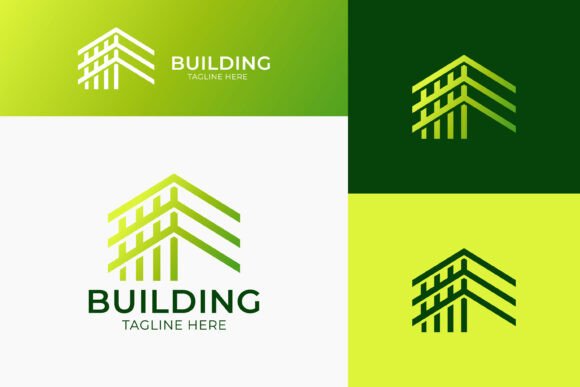
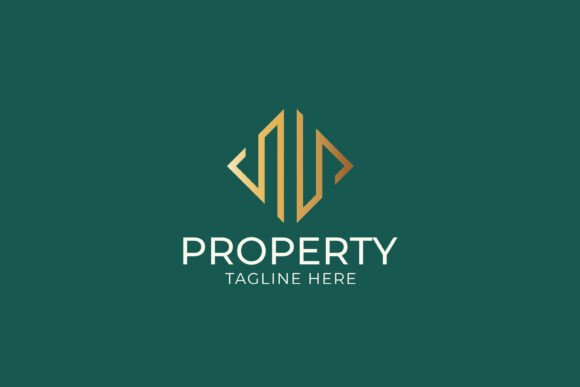
When you set out to refresh or build a corporate identity, the visual foundation matters more than most people realize. A logo is not just a graphic; it is the anchor point for every piece of communication your business produces. Elegant Property Logo Business Estate offers a modern linear residential real estate branding solution that fits directly into that critical first step. Whether you are a small business owner launching a new venture, a marketer overseeing a rebrand, or a freelancer delivering assets to a client, understanding how this design works within a real workflow will help you get the most out of it.
Where Elegant Property Logo Business Estate Fits in the Branding Process
Branding typically moves through several distinct phases: research and strategy, visual identity development, asset creation, and finally deployment across digital and print channels. Elegant Property Logo Business Estate belongs squarely in the visual identity and asset creation stages. It gives you a polished, vector-based logo design that you can adapt immediately, without starting from scratch or hiring a designer for weeks of conceptual work.
If you are in the middle of a rebrand, this graphic can act as the central element around which you build your color palette, typography choices, and supporting graphics. If you are just starting a project, it provides a strong directional starting point that saves time during the exploration phase. For those who have already launched but feel their current image lacks cohesion, the logo can be introduced as the unifying asset that brings consistency to everything from your website header to your business card.
Preparing Your Files for a Smooth Start
Before you dive into editing, take a few minutes to organize your workspace. The product comes with fully editable vector master files in .AI and .EPS formats, along with high-resolution 300 DPI versions in PDF, JPG, PNG, and SVG. This variety is not just a nice bonus; it directly affects how smoothly you can move between different tools and contexts.
Start by extracting the downloaded files into a dedicated project folder. Name the folder something clear like Branding_Assets_Logo so you can locate it quickly later. Open the .AI file in Adobe Illustrator first. Because the design is fully editable, you can adjust colors, scale, and layout without degrading quality. Check that your software version matches or is compatible with the file format. If you are on an older version of Illustrator, the .EPS file often works as a reliable fallback.
- Keep the master .AI file untouched as your source of truth. Make edits on a copy.
- Export final versions in the format you need for each platform. Use PNG for web, PDF for print proofs, and SVG for responsive web design.
- Verify that the 300 DPI setting is preserved when exporting for print. This ensures your logo appears sharp on brochures, signage, and stationery.
Using the Logo Across Digital Channels
One of the strongest features of Elegant Property Logo Business Estate is its adaptability for digital usage. Modern branding demands consistency across a website, social media profiles, email signatures, and app interfaces. Because the design is vector-based, you can resize it from a small favicon to a full-screen hero image without any loss of clarity.
Web Design and Responsive Layouts
When integrating the logo into a website, start with the SVG file. SVGs scale perfectly on retina displays and remain crisp on any screen size. Place the SVG directly in your HTML or use it within a CSS background. If your content management system prefers raster images, export a PNG at 2x resolution (for example, 600px wide for a 300px display area) to ensure sharpness on high-density screens.
For WordPress or similar platforms, upload the logo in the Customizer under the Site Identity section. Use the transparent PNG version if your site background is not pure white. This avoids the common issue of a white box around the logo on colored or image-based backgrounds.
Social Media and Email Signatures
Social media platforms often require square versions of logos. Use the .AI file to crop the design into a balanced square composition, then export a 1080x1080 pixel PNG at 72 DPI for most platforms. For email signatures, a compressed JPG or PNG works well. Keep the file size under 50 KB to ensure fast loading in email clients. Position the logo next to your contact details and link it to your website homepage.
App and Infographic Integration
If you are developing a mobile app, the logo should appear as a launch screen icon and within the app’s navigation bar. Export the logo as a high-resolution PNG at the exact dimensions required by iOS or Android guidelines. For infographics, use the vector files to scale the logo up or down without worrying about pixelation. Place it in the footer or header of the infographic to reinforce brand recognition.
Transitioning from Digital to Print Projects
Print requires a different mindset. What looks good on a screen may not translate perfectly to paper. The Elegant Property Logo Business Estate design handles this transition well because it offers high-resolution 300 DPI files and PDF exports that retain vector precision.
For business cards, use the PDF or EPS file. Set your document to CMYK color mode before printing. Even if the logo looks vibrant on screen in RGB, CMYK will give you more predictable results on a commercial printer. Request a proof from your print shop before running the full batch. Check that small details in the linear design remain clear at card size.
For larger print projects like brochures, signage, or banners, the vector files are essential. You can scale the logo up to billboard size without any loss of quality. When working in InDesign or similar layout software, place the .AI or .EPS file directly rather than embedding a low-resolution image. This keeps the link to the original vector data and avoids accidental compression.
One practical tip: always convert text to outlines in the vector file before sending it to print. This prevents font substitution issues if the printer does not have the same typefaces installed. The design arrives ready for this step, so you can outline everything in Illustrator in under a minute.
Maintaining Consistency Across Teams and Projects
If you work with a team, consistency becomes a challenge. Different people may export the logo at different resolutions or use slightly different colors. The master .AI and .EPS files serve as the single source of truth. Store them in a shared cloud folder or a company asset library. Create a simple brand guidelines document that specifies:
- Which file format to use for web, print, and social media
- The exact hex and CMYK color values of the logo
- Minimum size requirements to keep the design legible
- Clear space rules so no other elements crowd the logo
Having these guidelines saves time during onboarding and ensures that every piece of content you produce looks like it belongs to the same brand. The editable nature of the files means you can also create variations, such as a dark background version or a monochrome version, without needing to redesign anything.
Long-Term Usability and Adaptability
Brands evolve. What works today may need subtle adjustments in a year or two. Because Elegant Property Logo Business Estate is built in fully editable vector files, you can return to the source and make updates without losing quality. Change a color to align with a new campaign, adjust the layout for a different aspect ratio, or simplify details for smaller screens. The initial investment in a high-quality vector file pays off every time you need to modify something.
Another factor to consider is file organization over the long term. Keep your master files in a location you can access from any device. Cloud storage services work well, but make sure you have local backups too. As your project grows, you may accumulate dozens of exported versions. Adopt a clear naming convention: Logo_FullColor_RGB_April2025.ai or Logo_White_Print.eps. This prevents confusion when you are searching for the right file under deadline pressure.
Practical Workflow Example: Rebranding a Small Real Estate Agency
To see how everything comes together, consider a typical rebranding scenario. A real estate agency wants to modernize its image. The owner downloads Elegant Property Logo Business Estate and opens the .AI file in Illustrator. They adjust the color palette to match their existing company colors. Exporting a set of versions takes about 30 minutes: a full-color PNG for the website, a black-and-white version for print ads, a small square PNG for Instagram, and a PDF for business card proofs.
The next day, they upload the SVG to their WordPress site and update the favicon with a 32x32 pixel PNG. They send the PDF to a local printer, who confirms the design looks sharp at 300 DPI. By the end of the week, the agency has a cohesive look across their online presence, email signatures, and printed materials. The entire process, from download to deployment, takes less than two days of focused work.
This example illustrates how a single well-prepared asset can replace weeks of back-and-forth with a designer. It is not about cutting corners; it is about working smarter with the tools you have.
Final Observations on Integration and Quality Control
Elegant Property Logo Business Estate is not just a logo file. It is a complete branding component designed to fit into a professional workflow. The combination of editable vectors, multiple formats, and high-resolution output means you can move from concept to finished product without hitting technical roadblocks. Whether you are creating digital assets, print materials, or both, the key is to start with the master file, work in layers, and export purpose-specific versions.
Pay attention to color mode and resolution early in your process. Check that your software supports the file format you plan to use. Test the logo at the smallest size it will appear in your project to ensure every detail remains visible. These small quality control steps prevent problems down the line and help you maintain the polished image your brand deserves.
By treating the logo as a flexible asset rather than a fixed image, you open up more creative possibilities while keeping your branding consistent. The design adapts to your needs, not the other way around.