Evaluating Clothes Donation Icons for Your Visual Communication Needs
When designing for websites, mobile applications, social media, or printed materials, the choice of iconography plays a meaningful role in how quickly and clearly your message is understood. Among the many icon sets available, Clothes Donation Icons represent a focused collection designed to support themes of charity, reuse, sustainability, and community giving. This article offers a balanced evaluation of these icons to help you determine whether they align with your specific design goals, workflow, and audience expectations.
Understanding Clothes Donation Icons
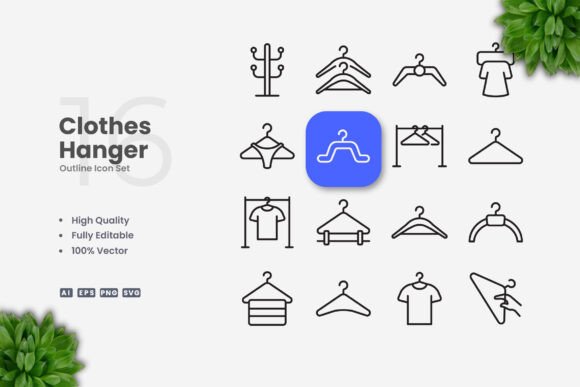
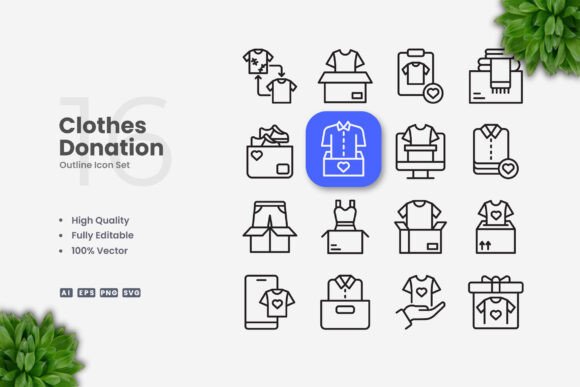
Clothes Donation Icons is a vector-based icon set centered on the concept of clothing donation and related charitable actions. The collection includes symbols such as donation boxes, hanging garments, folded clothes, recycling arrows combined with apparel, and human figures engaged in giving. Each icon is designed with a clean, simple aesthetic, making it suitable for a wide range of applications from digital interfaces to print collateral.
The icons are delivered in multiple file formats including Adobe Illustrator (AI), EPS version 10, SVG, and PNG with transparency. This variety ensures compatibility across different design environments and use cases, from web development to high-resolution print production. The set is described as 100 percent vector, fully customizable, and featuring editable strokes, which allows designers to adjust size, color, and stroke weight without losing quality.
Why Someone Might Consider These Icons
Designers and non-designers alike often seek icon sets that save time while maintaining visual consistency. Clothes Donation Icons appeal to individuals who need a dedicated set of symbols for a specific theme rather than a generic icon library. For example, a nonprofit organization creating a campaign around clothing drives would benefit from icons that immediately communicate the concept of donating apparel without relying on text labels.
Another reason for interest is the simplicity of the design. Clean icons tend to work well across different media because they avoid excessive detail that can become muddy when scaled down or printed at small sizes. This simplicity also makes them easier to integrate into existing design systems without clashing with other visual elements.
The editable stroke feature is particularly valuable for teams that need to maintain brand consistency. Changing stroke weight to match an existing interface or adjusting colors to align with a brand palette can be done efficiently using vector editing software such as Adobe Illustrator or CorelDRAW. This level of customization reduces the need to commission custom iconography from scratch.
Benefits of Using Clothes Donation Icons
One of the primary benefits is the focused thematic relevance. If your project revolves around charity, thrift, sustainability, or community support, these icons directly support that narrative. Using generic icons for a clothing donation campaign might require additional explanation or visual cues, whereas a dedicated set reduces cognitive load for your audience.
The vector format offers scalability without degradation. Whether the icon appears on a mobile app at 24 pixels or on a poster at 300 millimeters, the quality remains consistent. This is especially important for organizations producing both digital and print materials from the same asset library.
Including SVG files alongside PNGs gives developers flexibility. SVG icons can be embedded directly into web pages, styled with CSS, and made interactive with JavaScript, which is useful for modern web development workflows. For print designers, the AI and EPS files provide professional-grade control over every aspect of the icon.
The inclusion of a readme.txt file is a practical touch, especially for teams that may not frequently work with vector assets. Clear instructions on file usage can reduce setup time and prevent errors during implementation.
Tradeoffs and Considerations
While the focused nature of Clothes Donation Icons is a strength, it also represents a limitation. A set dedicated to a single theme may not be cost-effective for designers who need icons across multiple unrelated topics. In such cases, a broader icon library or a subscription-based service might offer better value, even if the individual icons are less specialized.
Another consideration is the design style. Clean and simple icons work well in many contexts, but they may not suit every brand or project. For instance, a brand with a highly detailed or whimsical visual identity might find that minimal icons feel out of place. Similarly, if your project requires a more illustrative or photographic approach, this vector set may not fulfill that need.
The editable stroke feature requires access to vector editing software. While Adobe Illustrator and CorelDRAW are industry standards, they involve a learning curve and licensing costs. Teams without these tools might find it difficult to customize the icons as intended. However, the SVG format can often be edited in free tools like Inkscape or even text editors, though with less precision.
It is also worth noting that the preview mockup is not included. This means the icons are provided as individual assets, not as part of a ready-to-use presentation template. If you need mockups for client presentations or internal approvals, you will need to create them separately.
Scenarios Where This Set Is a Strong Fit
Clothes Donation Icons are particularly well suited for organizations and designers working on charitable campaigns. A nonprofit running a seasonal clothing drive could use these icons on flyers, social media posts, and website banners to create a cohesive visual language. The simplicity of the icons helps maintain professionalism without distracting from the core message.
Mobile app developers building a donation or thrift marketplace app would also find value in this set. Icons such as a donation box or a hanger can serve as intuitive navigation elements or call-to-action buttons. The SVG format allows for responsive scaling across different screen sizes and resolutions.
Educators and authors creating infographics or booklets about sustainability and community giving may appreciate the clarity these icons provide. In educational materials, visuals that immediately convey meaning without text can improve comprehension for diverse audiences, including those with limited literacy in the publication language.
Small businesses or independent designers who need a quick, professional asset for a specific project may find this set a practical choice. The editable nature of the files allows them to adapt the icons to their brand without hiring a specialist illustrator.
Scenarios Where Alternatives May Be Worth Considering
If your project spans multiple topics such as education, healthcare, technology, and charity, a single-themed icon set will likely fall short. In that situation, a comprehensive icon library with hundreds or thousands of symbols across categories may be more practical. Services like Noun Project, Flaticon, or FontAwesome offer broad collections that can be licensed for various uses.
For teams that require a highly distinctive or custom visual style, commissioning original iconography might be a better investment. While Clothes Donation Icons can be customized within the bounds of their simple design, they will always retain that basic silhouette. If your brand identity demands a unique look that stands out from generic iconography, bespoke designs could be necessary.
Another scenario involves teams that prioritize speed and ease of use over customization. Some icon libraries offer icon fonts or ready-to-use components that can be dropped into a project with minimal effort. If your workflow benefits from drag-and-drop consistency rather than manual editing in vector software, a different delivery method may suit you better.
Additionally, if your budget is extremely limited, free icon sets or open-source options might cover your needs without any upfront cost. However, those alternatives often come with restrictions on usage, attribution requirements, or fewer file format options. The decision depends on the value you place on licensing clarity and professional support.
Practical Decision-Making Insights
When evaluating Clothes Donation Icons, consider the scope of your project first. A narrow, theme-specific project with a clear visual need will benefit most from this set. A broad or multi-purpose design effort will require a more diverse asset library.
Next, assess your team's technical capacity. If you have access to vector editing software and someone comfortable using it, the customization options are a real advantage. If not, the PNG files offer a simpler but less flexible alternative. Make sure the file formats provided match your output requirements before purchasing.
Also consider the longevity of your project. If you are creating a campaign that will run for several years or a product that requires ongoing updates, the ability to edit and re-export icons in different sizes and colors helps maintain consistency over time. The vector format supports this kind of iterative design process well.
Finally, think about the audience. Clean, simple icons are generally well received because they communicate quickly and clearly. However, if your audience expects a certain level of visual richness or is accustomed to a particular aesthetic, you may want to test the icons in context before committing to the set. A/B testing different icon styles on a landing page or in social media ads can provide useful feedback.
Determining Alignment with Your Goals
Clothes Donation Icons can be a match for your needs if you value focused thematic relevance, clean design, and flexible file formats. They are best used in contexts where the message of donation, charity, or sustainability is central and where visual simplicity supports rather than hinders communication.
They may not be the right choice if your project requires a broad icon set, a highly distinctive visual style, or a workflow that does not include vector editing capabilities. In those cases, exploring alternative libraries or commissioning custom work may better serve your objectives.
Ultimately, the decision comes down to how well the attributes of this icon set align with your specific design requirements, technical environment, and audience expectations. By weighing the benefits and tradeoffs outlined above, you can make an informed choice that supports your project's visual communication goals effectively.